

Website & Conversion Optimization
Improve the Website You Have Before Replacing What Already Works
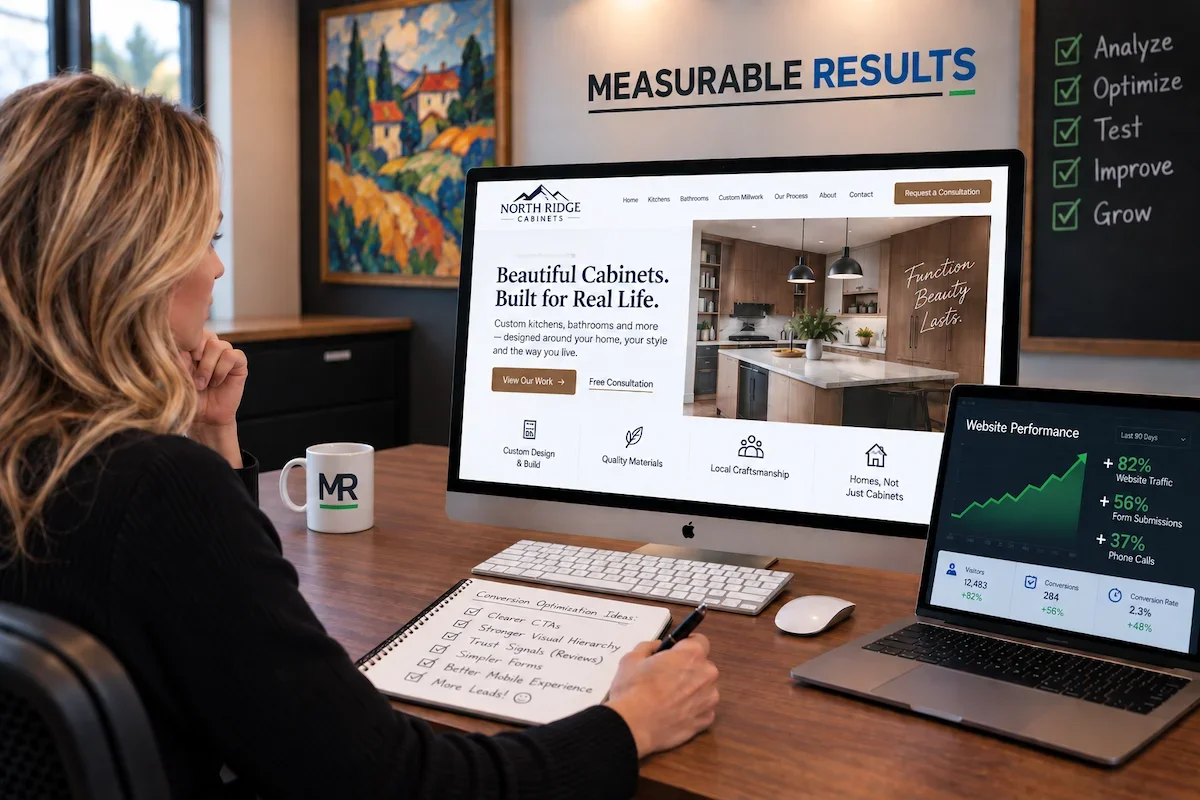
More Traffic Does Not Fix a Confusing Website
A business can attract more visitors and still lose opportunities if the website makes the next step difficult.
Customers may leave because the service they need is hard to find, the first screen is unclear, the mobile layout is frustrating, the proof feels weak, the contact path is buried, or the page simply does not answer the question that brought them there.
Website optimization focuses on those obstacles.
Start With What Is Already Working
We do not assume an older website is a bad website.
It may already have valuable rankings, strong service pages, useful photographs, backlinks, familiar URLs or content customers rely on. Those assets should be identified before major changes are made.
Our first question is not “How do we redesign this?” It is “What should we preserve, and what is getting in the customer's way?”
Clarify the First Screen
A visitor should quickly understand what the business does and whether the page is relevant.
That does not mean cramming every service above the fold. It means establishing the right context with a clear headline, useful supporting message and an appropriate next step.
When the first screen is vague, decorative or centred on the company rather than the customer's need, we strengthen it.
Make Navigation Match Customer Thinking
Internal company terminology does not always match the way customers look for help.
We review menus, service groupings, page names and internal links to make sure visitors can move through the website without understanding the company's organizational chart.
Good navigation reduces thinking. It should feel obvious.
Strengthen Trust Where the Decision Happens
A testimonial hidden on another page cannot reassure someone who is hesitating on a service page.
We place relevant proof where it helps: reviews, project examples, photographs, process explanations, credentials or other verified trust signals near the decisions they support.
The proof has to be real. Optimization is not an excuse to manufacture authority.
Improve Calls to Action Without Turning the Site Into a Sales Funnel
A call to action should help the customer take a sensible next step.
Some visitors are ready to call. Others want to send details through a form. Some prefer text or email. Some want to book a time.
Where multiple contact methods are practical for the business, we keep them available rather than forcing every personality and every level of urgency through one button.
Forms Should Ask for What the Business Actually Needs
Long forms create work for the customer.
We review whether each field helps the business respond effectively. If information can wait until the conversation, it may not belong in the first inquiry.
At the same time, a specialized service may legitimately need more detail. The right form is the shortest form that still supports a useful response.
Mobile Friction Is Business Friction
Buttons that are difficult to tap, tiny text, awkward forms, buried phone numbers and oversized decorative sections can all make a mobile visit harder.
We test the actual path a customer takes on a phone, not just whether the layout technically fits the screen.
Use Data to Find the Next Improvement
Analytics can show which pages people enter, which actions they take and where important journeys break down. Search data can show which queries and pages are attracting attention. Customer conversations can reveal questions the website failed to answer.
We combine those signals with direct page review rather than pretending one metric explains everything.
Optimization Is a Process, Not a One-Time Score
There is no universal conversion-rate number that proves a website is finished.
Different services, markets, seasons and lead types behave differently. We establish the meaningful actions for the business, make improvements, validate functionality and watch what changes.
The goal is a better customer journey and more qualified opportunities — not a prettier dashboard.
Before You Rebuild, Find Out What Can Be Improved
We can review your existing website for customer friction, service clarity, trust, mobile usability and conversion paths, then identify the highest-value changes.